
DIGGING DEEPER #4: FACTS & TRUTH
I’ll dig in two directions here: one is about our changing perceptions and knowledge over time. The other is trickier and asks what is the benefit of facts and truths?

I consider lying cowardice and obscuring justice criminal. Fake news/stories are acts of vandalism (at best). Lobbyism is short-sighted idiocy and greed (on both sides). And sloppy research makes me curse (at best).
However, I am critical of so-called facts and truth.
I’ll dig in two directions here: one is about our changing perceptions and knowledge over time. The other is trickier and asks what is the benefit of facts and truths?
It is no secret that what is true today might be disproven tomorrow. What looks like a fact, might lose its validity in the face of newly added findings. So to speak of facts and truths as an absolute does not reflect reality.
However, today, with the knowledge we have, we are capable of establishing what is factually true today. And so long as we are aware of the possibility that a new discovery might change the assessment of what is true, I’m fine with truth. Though I personally prefer to say that truth is always ever an approximation, often biased, too often a generalisation.
On to the tricky dig.
What is the benefit of facts?
A substantiated fact allows us to assess a situation with a certain accuracy. That’s good. It becomes problematic if you have two opponents, each throwing around their sets of facts, each claiming to be right. And that’s where the very idea of having facts, is unhelpful. If we, for example, had a culture of exploring together, if a situation needs our action, then we would do just that: explore together. But since we have a culture where we can buy, invent, popularise so-called facts, facts become a problem.
The same happens with truth. If I have two or more sides, each of which is convinced of their truth and of the absolute nature of truth, then nothing will ever get resolved.
If you think about it, some things might deserve the label truth, but it is actually more effective to assume that we don’t know anything for certain, that truth tends to be elusive, and therefore we should develop a culture where we think, explore and act together, and frequently review our findings.
The frequent review is particularly important because that guarantees that no one comes along with some ultimate truth, but that we continue to keep thinking and exploring — together.
ADDITIONAL FOOD FOR THOUGHT
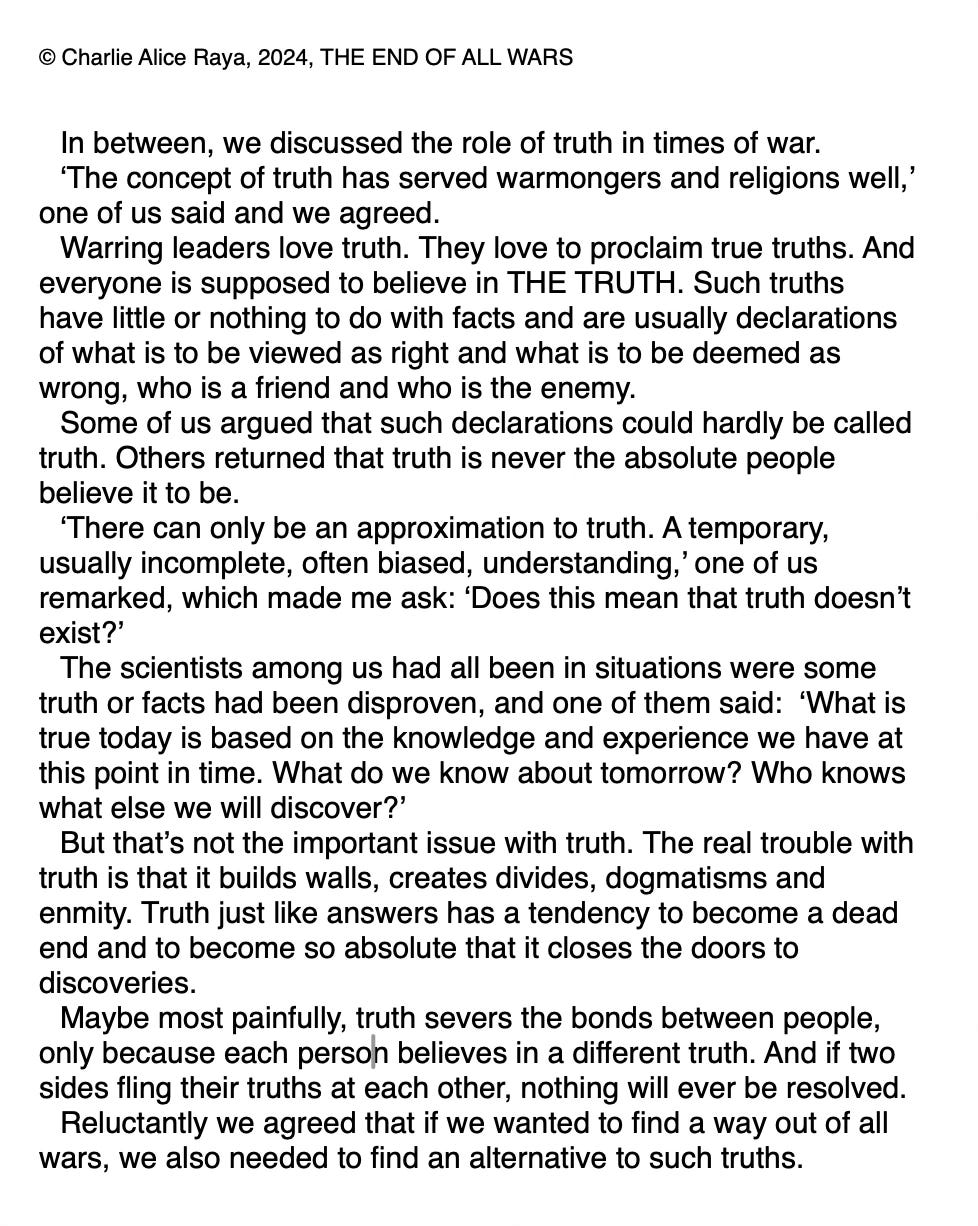
The first extract is from THE END OF ALL WARS where a group of thinkers talks about the troubles with truth in times of war.
TRUTH IN WARS
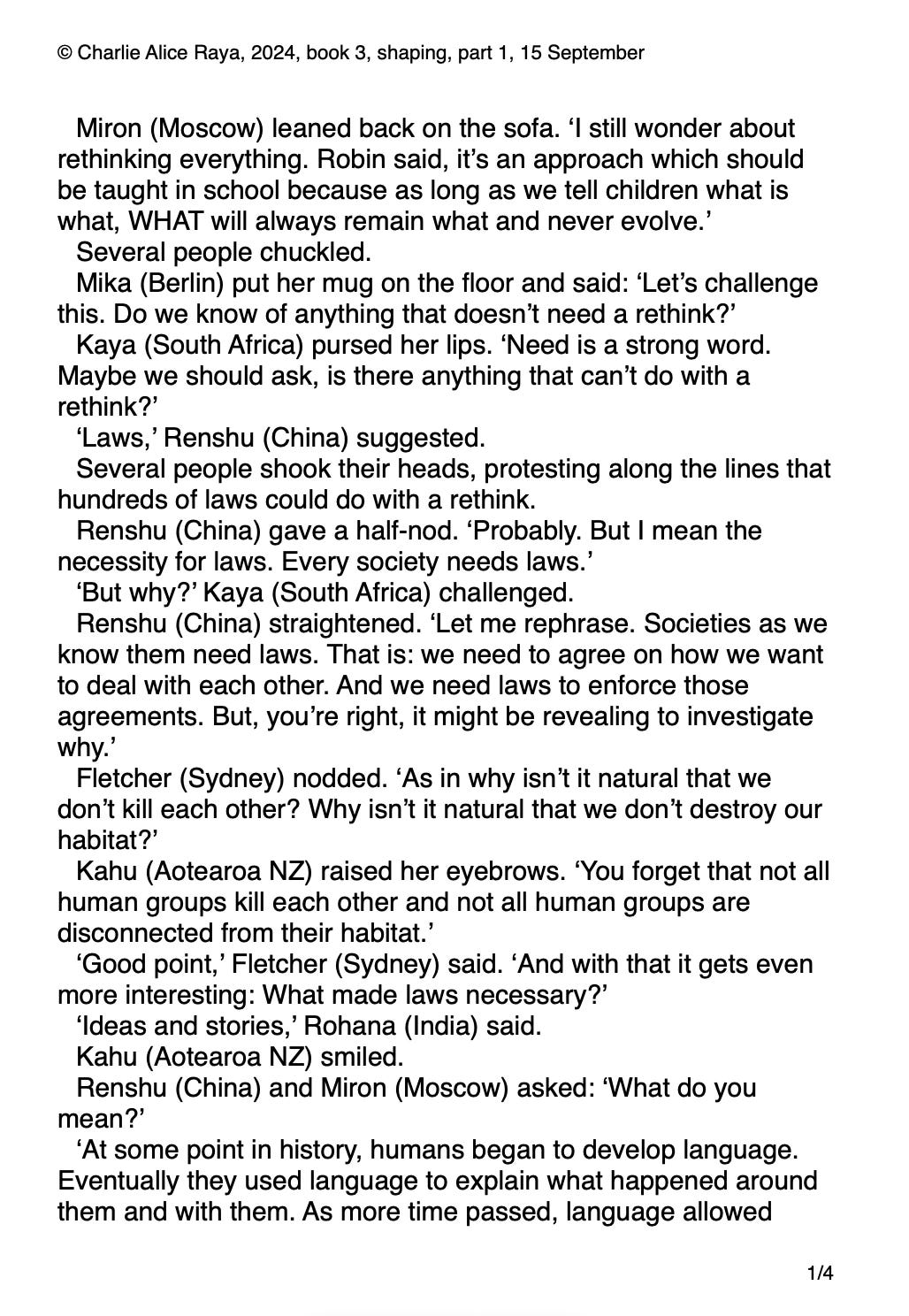
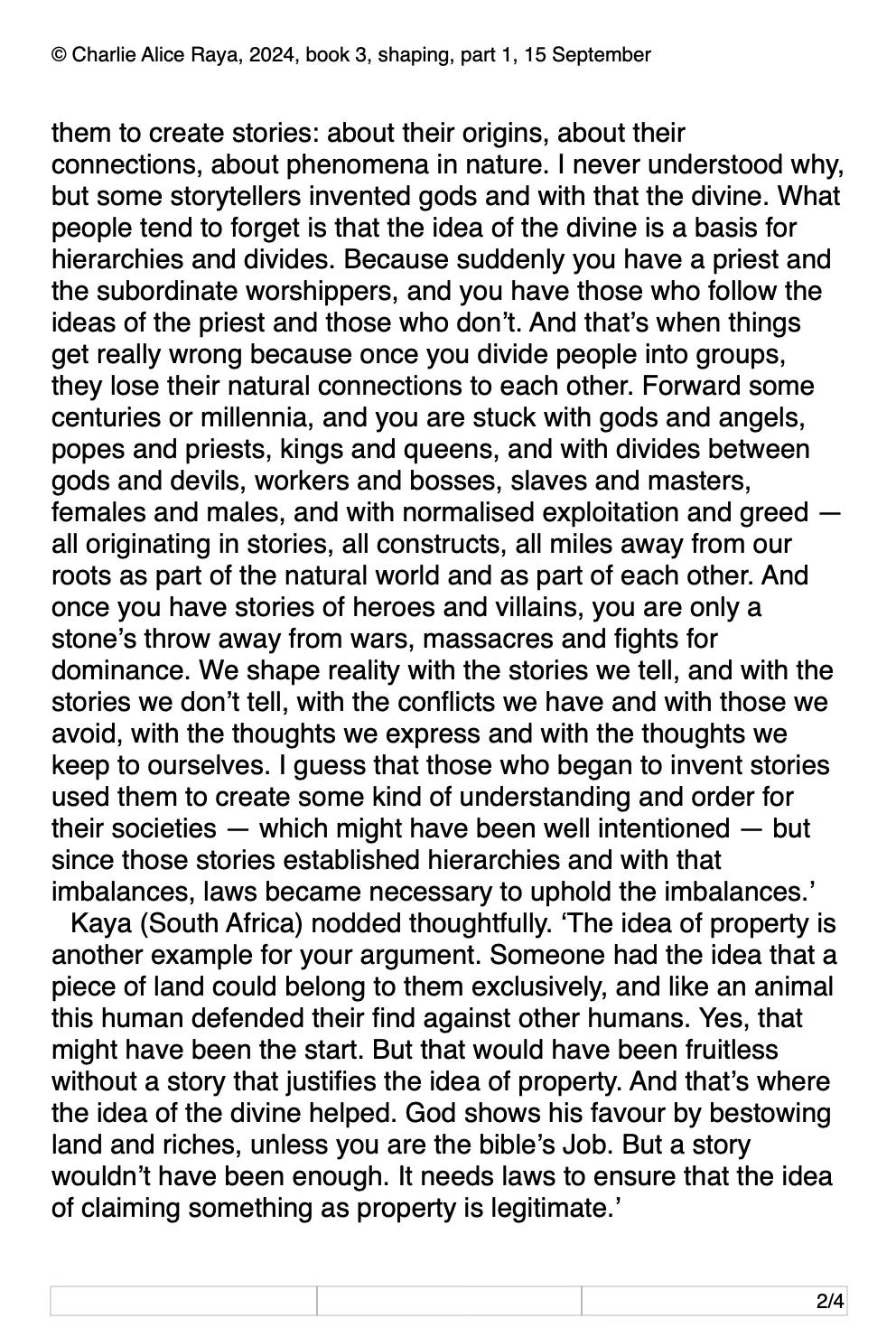
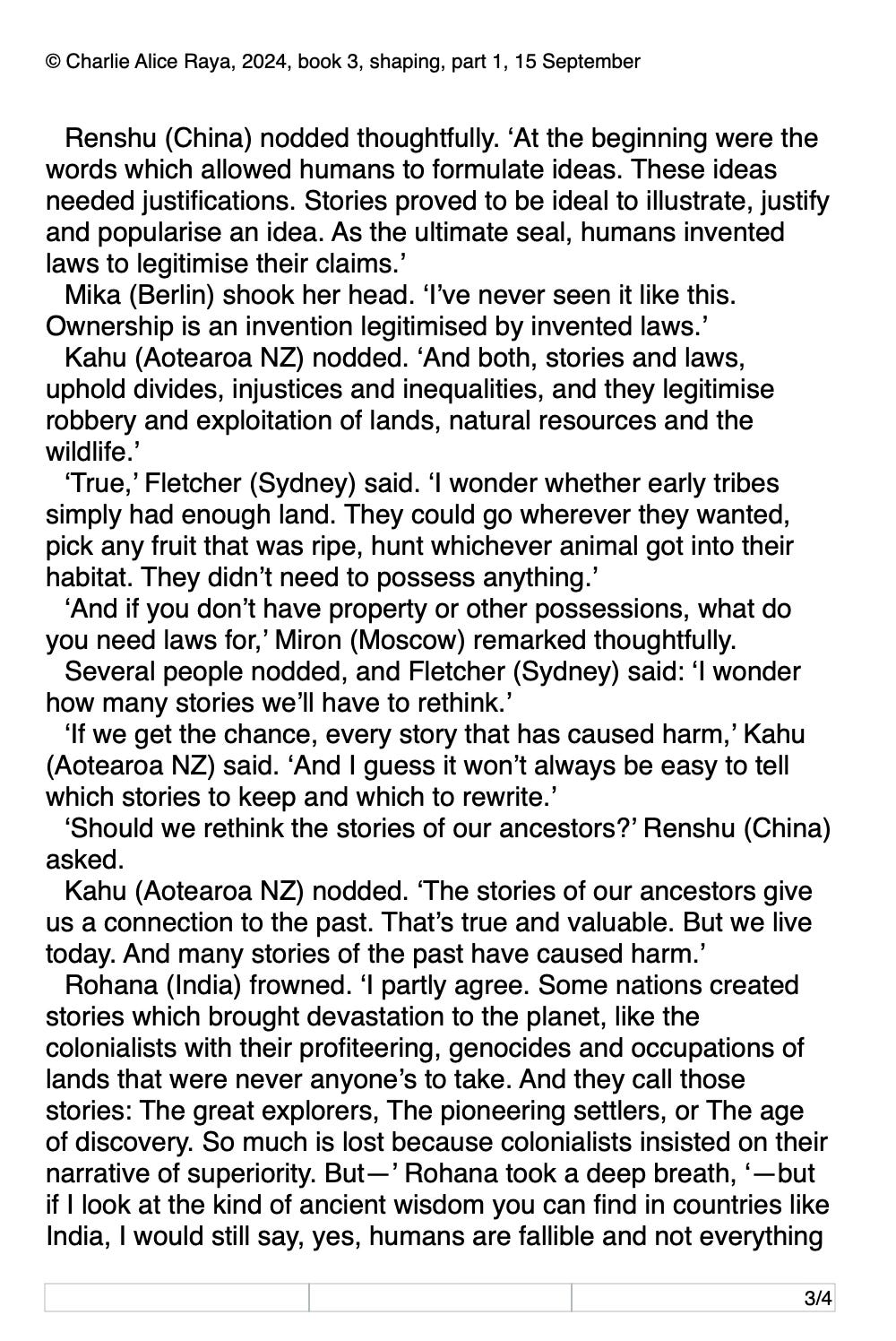
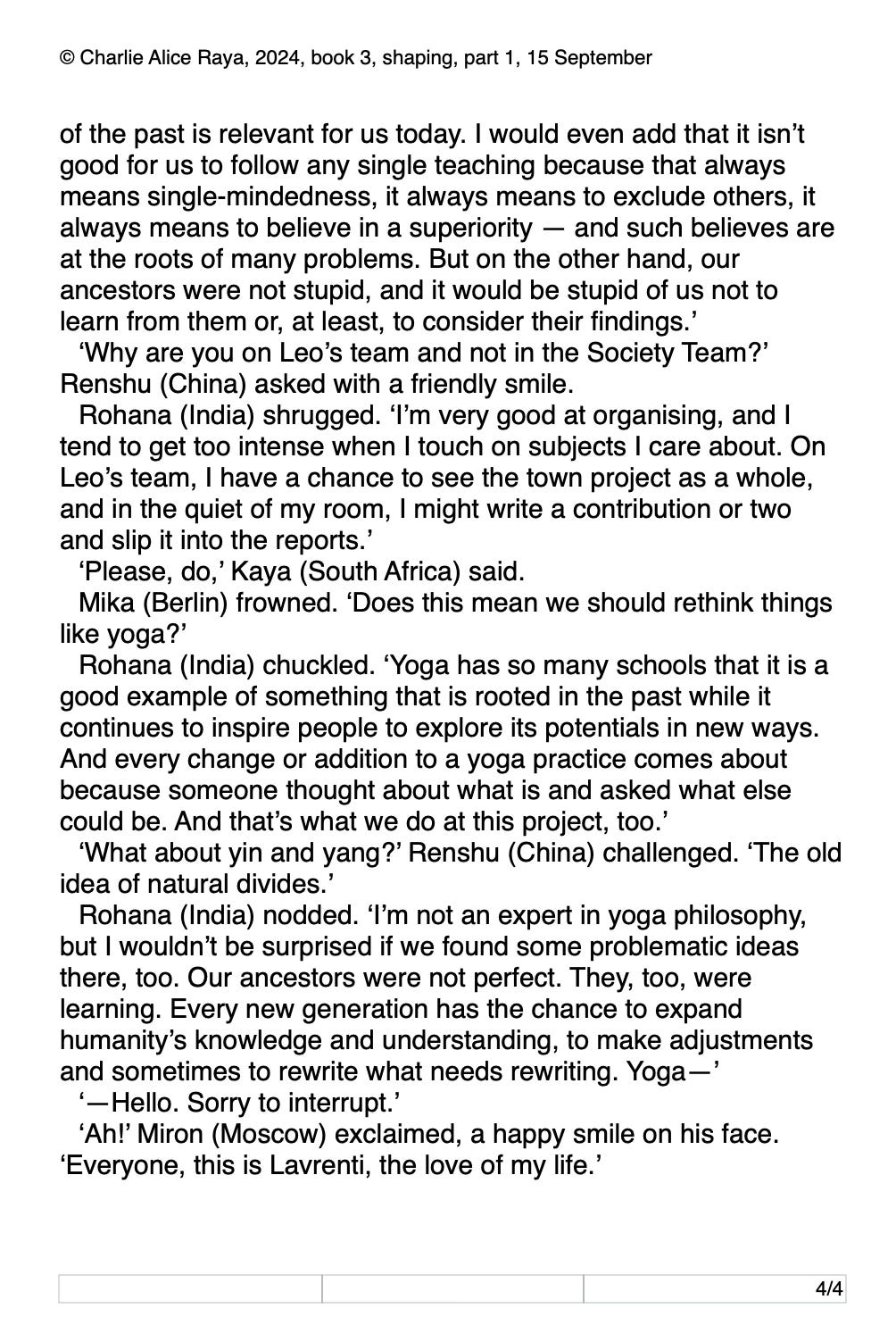
RETHINKING EVERYTHING & A WORLD MADE OF STORIES
The second extract from book 3, shaping, members of the project's international team talk about rethinking everything, and how stories and narratives shaped our world.
Find the books by Charlie Alice Raya on their website >