
DIGGING DEEPER #3: MAKING UP STORIES TO LEARN
One thing, I didn’t expect from writing is how much I would learn in my own stories, from my own characters.

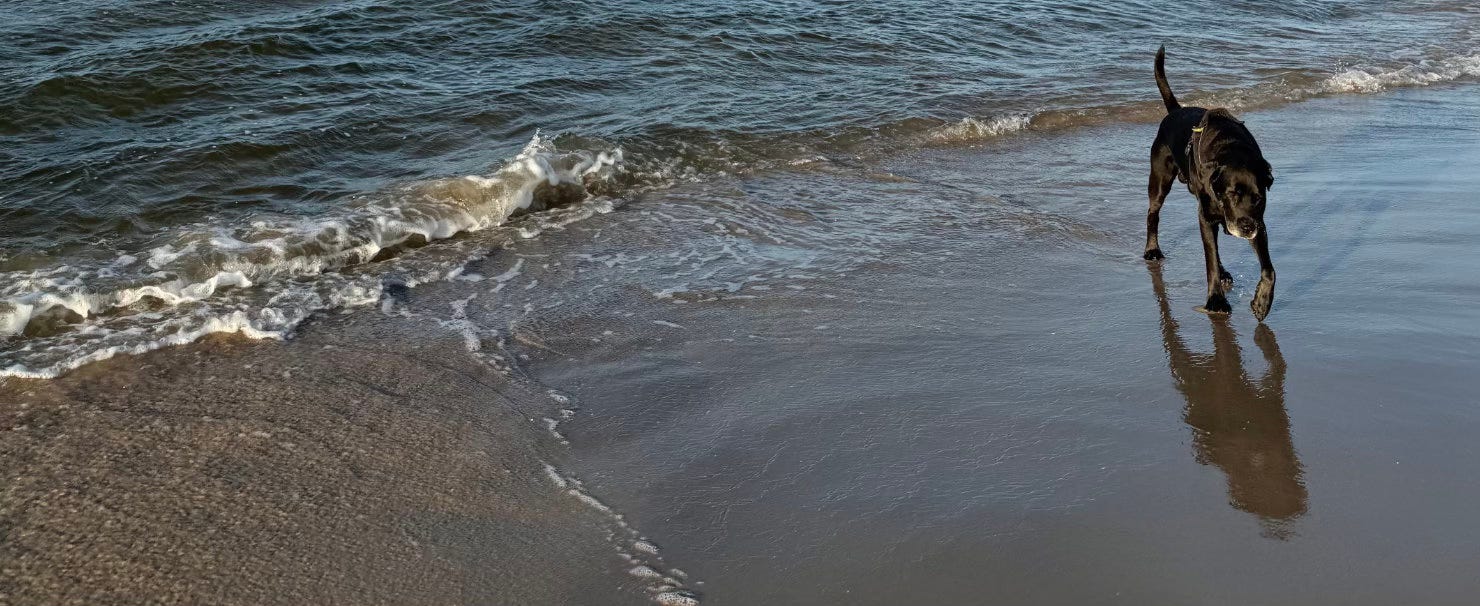
I love inventing stories to explore an idea, to dig deeper into a question, or to test what would happen in this or that scenario. One thing, I didn’t expect from writing is how much I would learn in my own stories, from my own characters.
How is this possible? How can we learn without reading a book? Without listening to someone else? Without learning that something from someone else?
I’d love to hear a neurologist’s view on this. Not least, because for the following, I can only speak for myself.
My main work are the easy town books where I let a team of thinkers and experts develop, plan and run a town experiment to find out what kind of environment the human needs to thrive (as in mentally healing, knowing and using their talents, slow to anger, capable to communicate and so on).
I know the characters quite well by now, so often I just let those characters happen to each other. There’s a fun chapter in book 3, shaping, where unlikely teams meet in crossover meetings to see what they can learn from each other, such as the Arts Team and the Health Team (see extract).
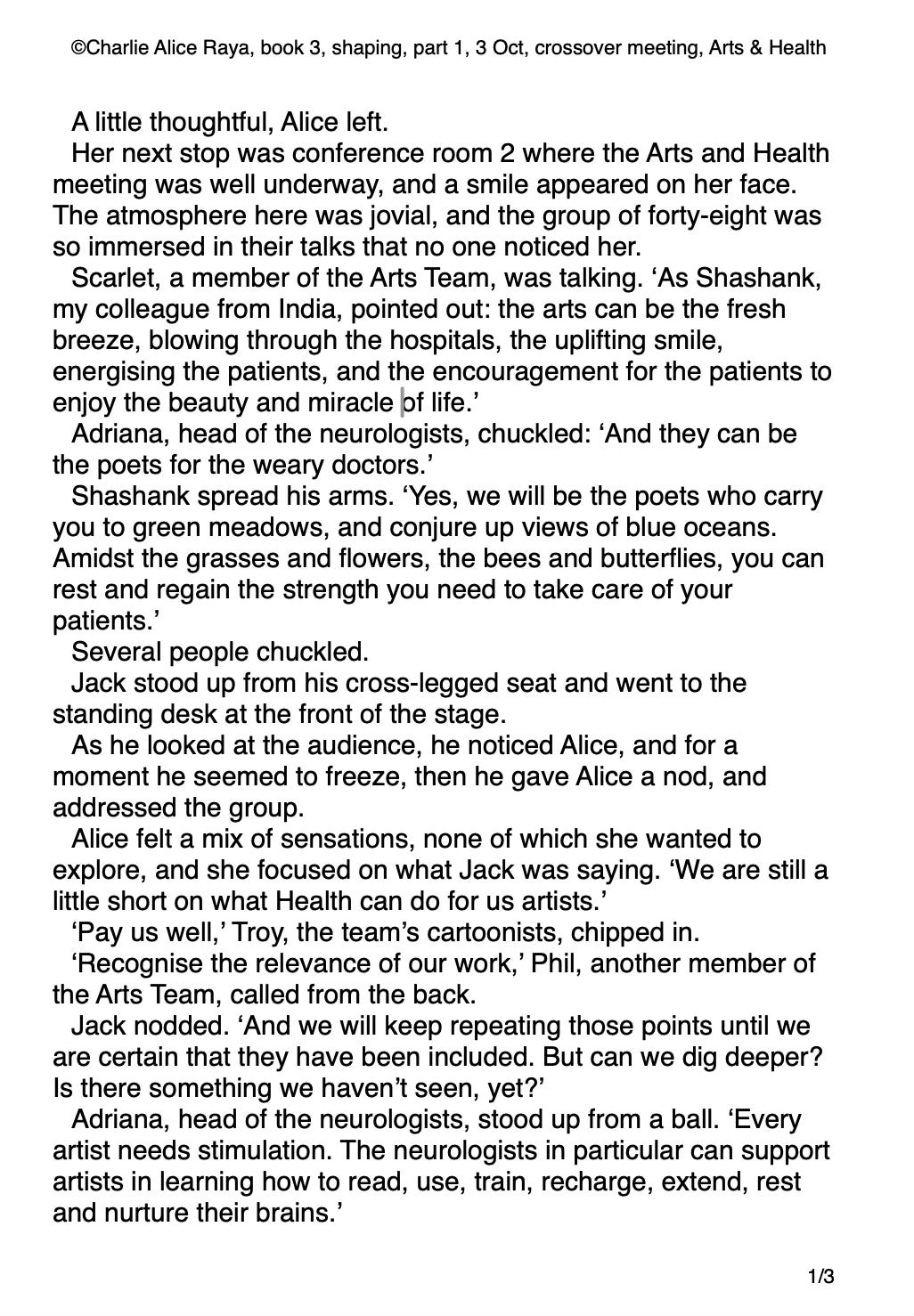
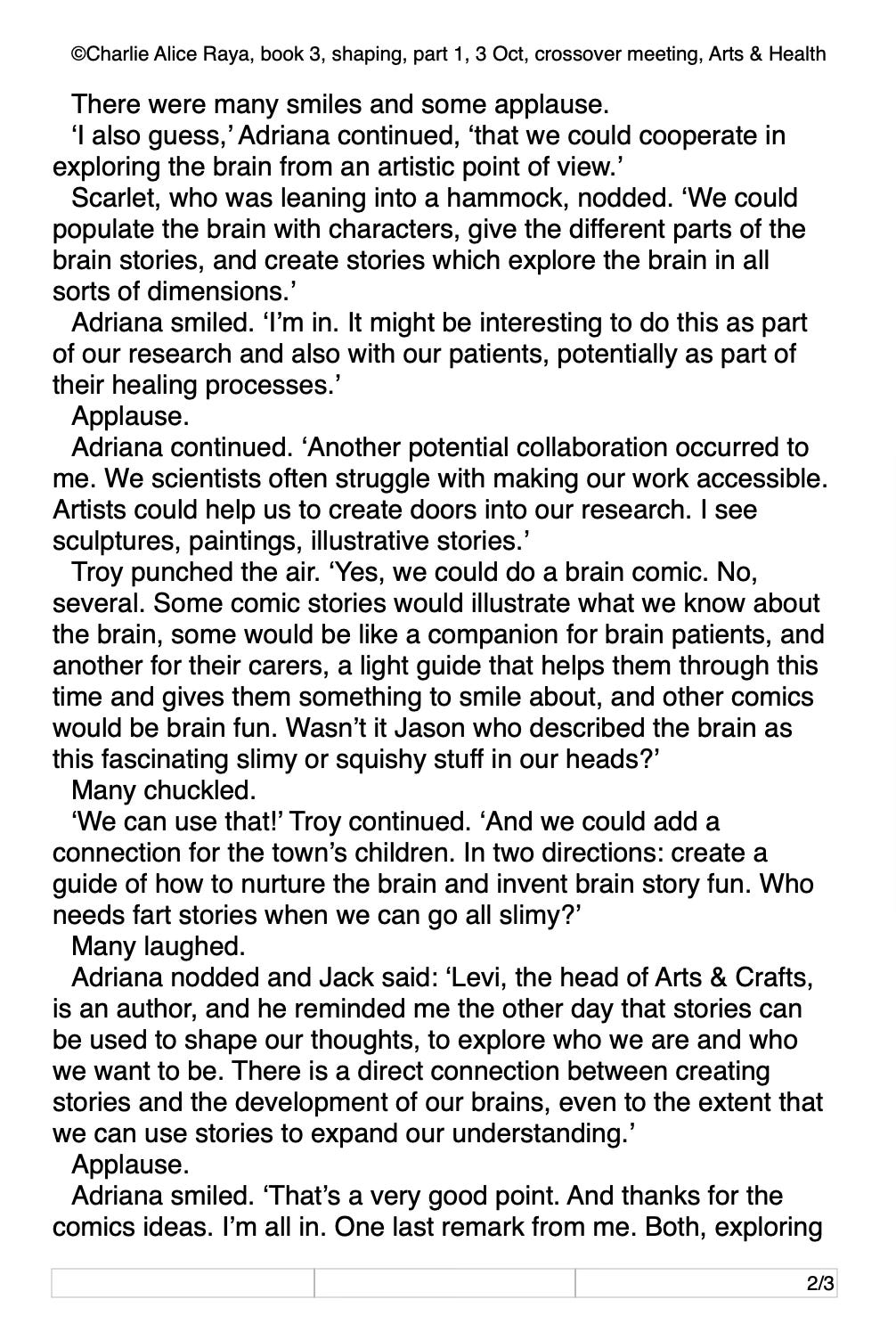
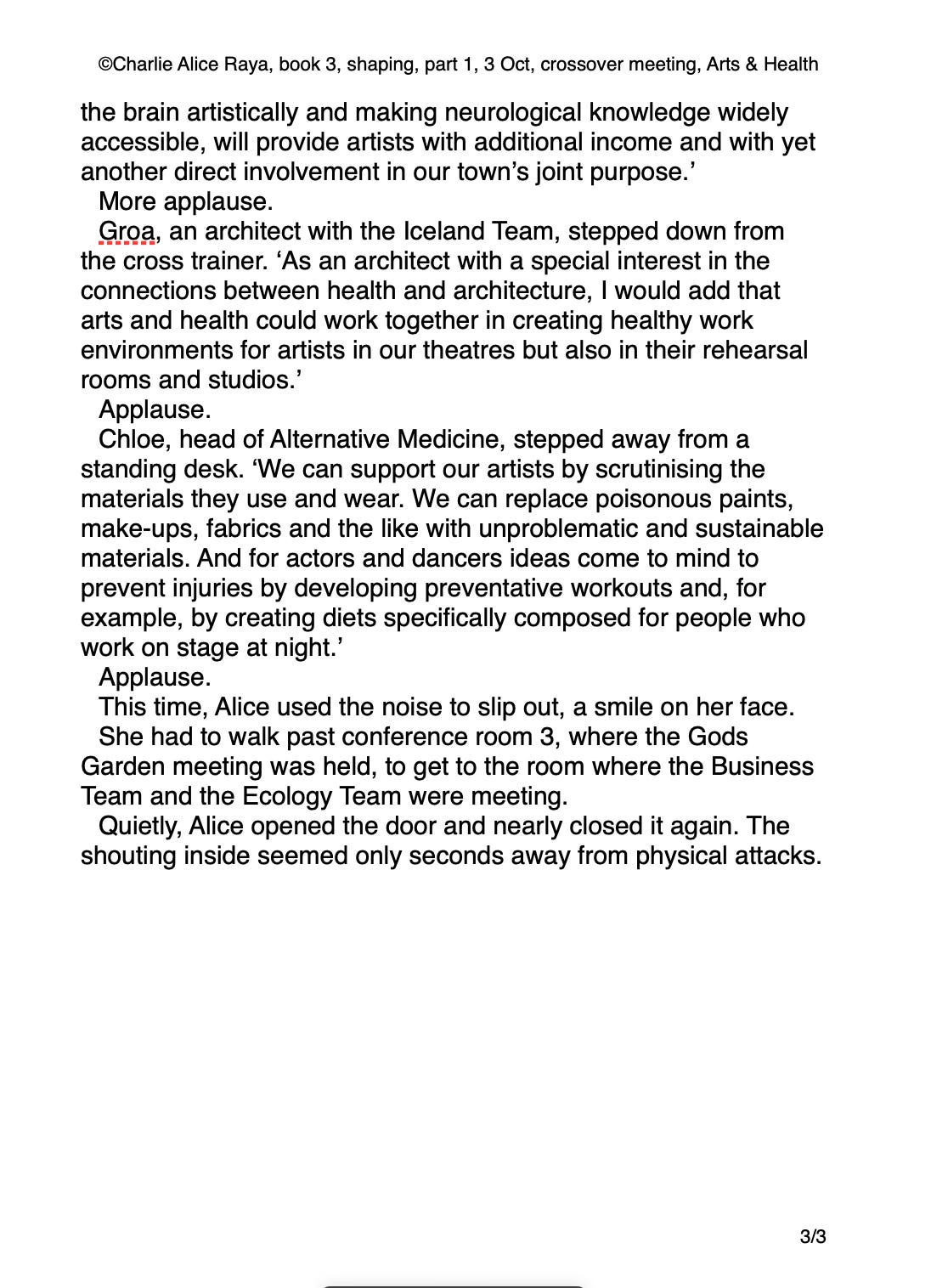
And as I egg these characters on, my mind comes up with all sorts of intriguing, unexpected questions and ideas. That’s where I learn. You could say, I learn by letting thoughts happen.
Then there are the cases where I challenge a character or myself. A constant challenge for me is any mention of religion since it’s a subject on which I would not trust myself in a public debate. But at the writing desk, I can allow myself to let out a first rant, and then I can begin to shape it into something useful, something that seeks balance (where possible), something that seeks to engage not bite or shout. And again I learn.
I learn every time I dig deeper into what this town could be like and what the consequences of this or that decision might be. Reality will be something different, and, yet, the visions and ideas created in the stories, the things learned and comprehended by playing through scenarios are invaluable.
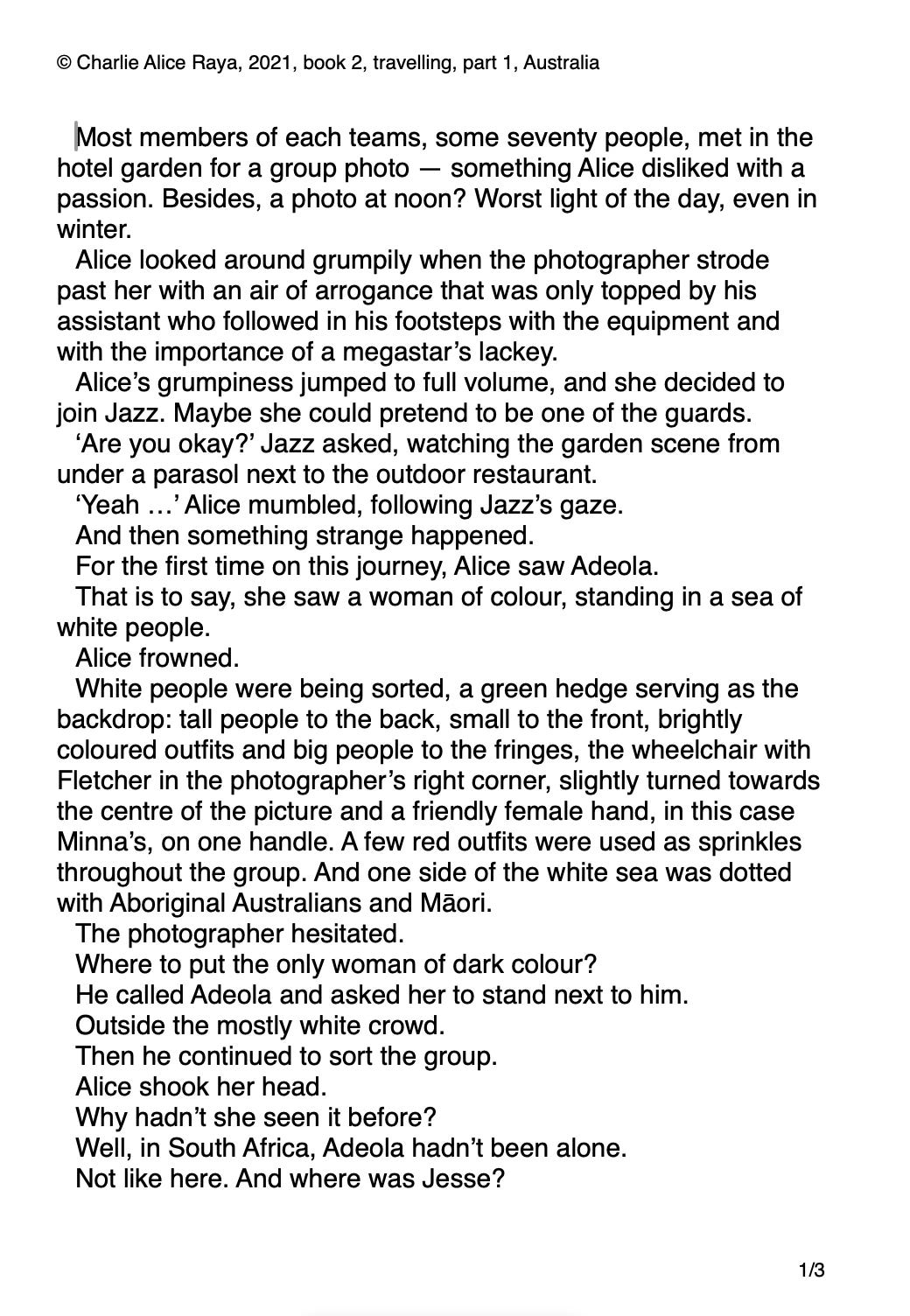
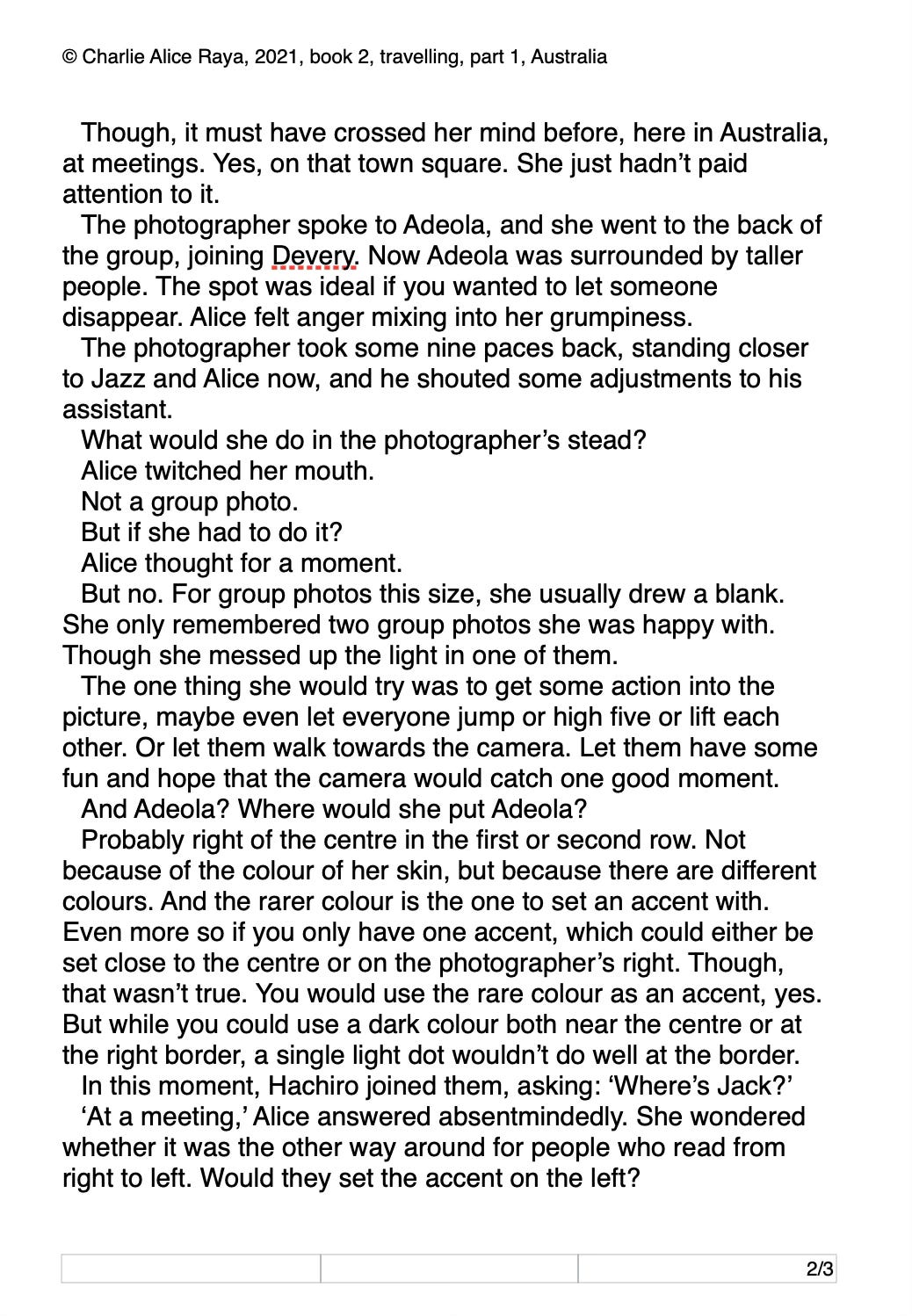
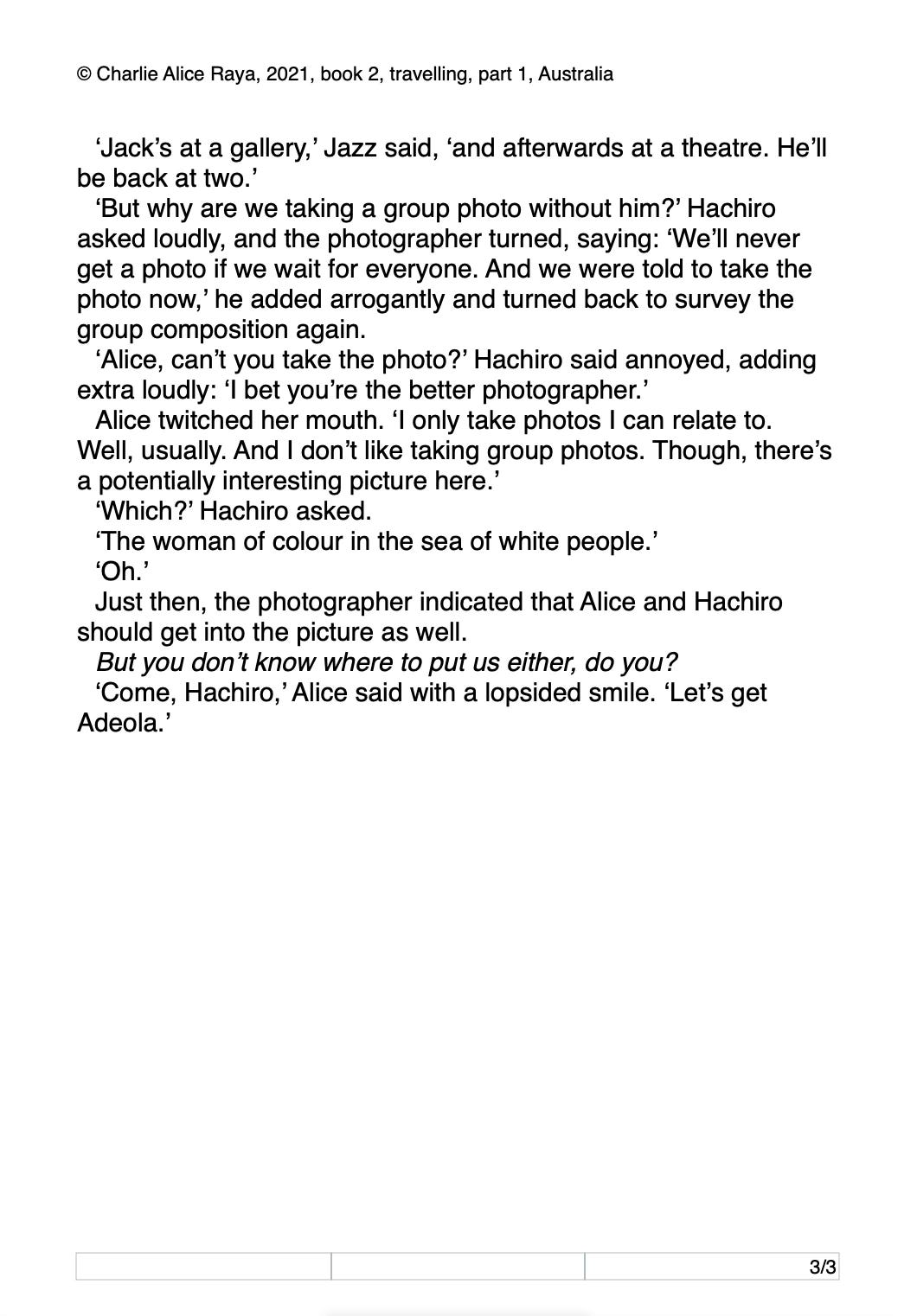
And then there are the unexpected lessons. For me the most amazing example is still that of Adeola, a character who started as a name I liked, who became a main character in the process of writing book 2, and who taught me that racism is exactly the f-up, enough people have been pointing out. The following is a key scene where a penny or two finally dropped. And it did so while I was in the story.
How can you use stories to learn?
Anger or incomprehension are usually easy entry points. Take something that angers you, and invent a story in which you let the character find the roots of this anger and ways to deal with the anger in a way that doesn’t harm you and that, at best, gives you some healing and understanding in the sense that you have some ideas how to deal with the root causes you discovered.
Does this mean, we need no input from others?
No. It means that we can use what we hear in our explorations and that once we resurface from our story, we can check our findings with those of others.
Maybe the most important takeaway from this post is that every single human is capable of thinking, of discovering, of exploring. And that stories can help us not only to know but to understand what we know.
There is no need to believe anything we hear. We can test everything we’re being told in our own minds. And every thought we have taken on a journey in our minds will have a better foundation than anything we simply repeat.
Is it possible to learn thinking?
I think so. It requires the freedom to look at a stone and say: alright then, let’s find every possible angle relating to that stone and to stones in general. A story is the playground that can give these explorations complexity, and that can give the stone a past, a present and a future.